Dental Assistant Certification in Anderson: A Practical Guide
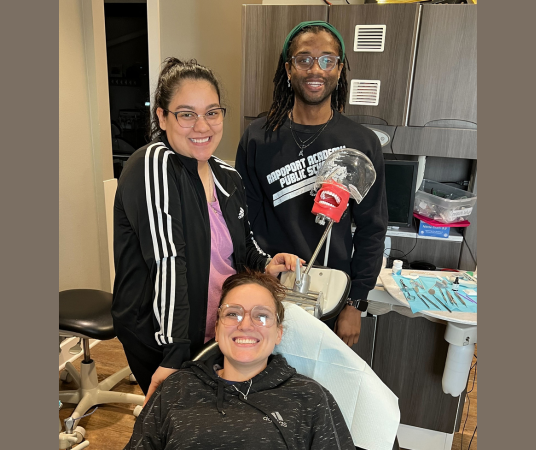
Dental Assistant Certification in Anderson: What It Takes
If you are training to become a dental assistant in Anderson, certification is the step that tells employers you have met a recognized standard. The credential Anderson employers look for most is the DANB CDA (Certified Dental Assistant) through the Dental Assisting National Board.
This guide explains how the exam is structured, how students at Anderson Dental Assistant School prepare for it, and why certification matters for pay and hiring in the Anderson job market. Whether you are weighing the field or already enrolled, knowing how the credential fits into your first year helps you plan the path with confidence. Anderson Dental Assistant School builds its 12-week program around getting students exam-ready, not just course-complete, so the credential is within reach as soon as you finish rather than something you chase on your own later.
What certification can dental assistants earn in Anderson?
The DANB CDA (Certified Dental Assistant (CDA)) is the credential most widely recognized by Anderson employers. It is earned by passing a standardized exam after completing an approved program, and it is offered through the Dental Assisting National Board. According to the U.S. Bureau of Labor Statistics, demand in this field stays strong, which keeps certified assistants competitive in the Anderson market (Bureau of Labor Statistics, Occupational Outlook Handbook, 2025).
What the DANB CDA covers
The DANB CDA exam covers general chairside assisting, radiation health and safety, and infection control. The content maps closely to the day-to-day work in an Anderson dental office, which is why Anderson Dental Assistant School graduates often target it first. It is a credential that proves you can do the core job, not just that you attended a program, and that distinction matters to Anderson employers sorting through applicants. Employers in Anderson frequently list the credential by name in their job postings, so earning it makes you competitive from your very first application.
Other credentials to know
Many states also recognize a registered dental assistant (RDA) or expanded-functions credential; In Indiana, dental assistants who take X-rays complete approved radiography training; requirements are set by the state and the supervising dentist. Earning a nationally recognized credential also travels well if you ever move outside Anderson or Indiana, which gives your career more flexibility over the long run.
How is the certification exam structured?
The exam is computer-based and combines clinical and procedural content with the practical knowledge a dental assistant uses every day. Knowing the format ahead of time takes much of the stress out of test day.
Exam content and format
The exam tests patient care, clinical procedures, terminology, safety, and the routine tasks a dental assistant performs in an Anderson office. Questions are multiple choice and the exam is timed. The content mirrors what Anderson Dental Assistant School students practice in lab, so the exam reinforces the training rather than introducing surprises, and knowing the categories in advance lets you study with purpose instead of reviewing everything at once.
How long the exam takes
The exam runs a few hours at an approved testing center or, where offered, an online proctored setting. Anderson Dental Assistant School walks students through registration and scheduling so the logistics are handled well before the program ends, and no one is left figuring out the paperwork alone.
How do Anderson students prepare for certification?
Preparation is built into the program rather than left to chance. Anderson Dental Assistant School structures its 12 weeks so that certification readiness develops alongside hands-on skills.
Built-in exam preparation
Throughout the 12-week program, Anderson Dental Assistant School pairs clinical lab work with review of the competencies the exam tests. By the final weeks, students are working through practice questions and reinforcing weak spots rather than cramming. Because the review is spread across the whole program, the material has time to settle, and students walk in on test day having already seen the question styles many times.
What to expect on test day
By the time Anderson Dental Assistant School students reach the exam, the format is familiar rather than intimidating. You arrive at the testing center, verify your identity, and work through the timed sections at your own pace within the limit. Because the program has already walked you through practice questions in the same style, most of test day is simply applying what you have done in lab and on your externship. Anderson Dental Assistant School advisors make sure you know what to bring, where to go, and how scoring works ahead of time, so nothing on the day itself comes as a surprise. That preparation is a large part of why a focused, well-supported program is such an effective path to certification for working adults in Anderson.
The externship’s role
The 40-hour externship places students in a real Anderson-area dental office, where the day-to-day work consolidates everything the exam covers. For many graduates the externship is also where the first job lead comes from. Walking into the exam after real clinical hours makes the content concrete rather than abstract.
How does certification affect pay and hiring in Anderson?
Certification is one of the largest controllable factors in early-career pay. For Anderson employers it reduces hiring risk and shortens onboarding.
The pay differential
Independent surveys consistently show certified assistants earn meaningfully more per year than uncertified peers. The national median wage is $47,300, with the top tier reaching $61,780 (Bureau of Labor Statistics, Occupational Outlook Handbook, 2025), and certification helps assistants move up that range faster in Anderson. Stacked over a multi-year career, that differential more than covers the cost of training, which is why so many Anderson Dental Assistant School students sit for the exam as soon as they finish.
Why Anderson employers prefer certified staff
A national certification signals a verified, standardized skill set. For larger Anderson employers that hire in volume, that signal is often the difference between an interview and a pass, and many translate it directly into a higher starting wage and earlier trust with responsibility. Over time, that earlier trust tends to mean faster access to the more advanced tasks that move your pay up the range.
What can Indiana dental assistants legally do at work?
Scope of practice varies by state. Check with Indiana State Board of Dentistry for current requirements in Indiana. The specific tasks a dental assistant may perform are set by state law and by the supervising provider, so duties can differ from one Anderson office to the next.
In day-to-day Anderson practice, the role typically includes the clinical and administrative work taught at Anderson Dental Assistant School, performed within Indiana scope and the supervising provider’s direction. In Indiana, dental assistants who take X-rays complete approved radiography training; requirements are set by the state and the supervising dentist. Certification does not by itself expand your legal scope, but it signals that you can perform those tasks to a recognized standard, which is part of why certified assistants are trusted with more responsibility sooner.
What are the other benefits of attending Anderson Dental Assistant School?
Beyond exam preparation, students choose Anderson Dental Assistant School for the things that make certification achievable: small class sizes, hands-on lab work, instructors who are practicing professionals, and an externship that places you in a real Anderson dental office. The program covers the same competencies the exam tests, so the training and the exam reinforce each other rather than pulling in different directions. Tuition is $3,650 with flexible payment plans, your scrubs and supplies are included, and the 12-week format lets you train without stepping away from work. By graduation you have the clinical hours, the exam preparation, and a clear path to the credential Anderson employers look for.
If certification is your goal, a focused program with built-in exam preparation is the most direct way to get there. Contact Anderson Dental Assistant School today to learn more about becoming a certified dental assistant in Anderson.
You're 12 weeks from the dental assistant career you deserve.